Physical
Homes, infrastructure, material, public space, and the systems that make daily life possible.

Public symposium & learning programme
Library of Alexandria
From learning environments to civic renewal
Oioioi
Civic recovery
Infrastructure, housing, procurement, and finance are necessary. They are not sufficient.
After conflict, displacement, and civic fragmentation, societies also need to rebuild trust, learning, memory, participation, and public life. RR1 asks what rebuilding requires when the damage is social and civic as well as physical.
Homes, infrastructure, material, public space, and the systems that make daily life possible.
Trust, dignity, memory, education, and the relationships through which communities recover.
Participation, dialogue, shared institutions, and the capacity to shape a common future.

What happens in Alexandria?
Architects, educators, peacebuilders, artists, students, cultural institutions, and civic actors meet for three days at the Library of Alexandria.
The programme moves between public reflection and practical methods: keynotes, dialogue, masterclasses, embodied learning labs, applied cases, and documentation.
11–13 October 2026 · Bibliotheca Alexandrina
8 sessions · Full timetable available
What to expect
18:05–18:10 · Director of the Bibliotheca Alexandrina
18:10–18:15 · Norwegian Ambassador
18:15–18:35 · A film by Fatima Lianes.
18:35–18:45 · Thania Paffenholz · Programme Host
18:45–19:30 · Kjetil Trædal Thorsen · Craig Dykers
A 360° PERSPECTIVE on the programme of people, places and shared futures.
19:30–20:05 · Moderated by Thania Paffenholz
Time to be confirmed · Daniel Proietto · Know Nation
16 sessions · Full timetable available
What to expect
09:45–09:55 · Thania Paffenholz · Programme Host
10:00–11:30 · Daniel Proietto · Know Nation
10:00–11:30 · CCCPA
Building Emotional Infrastructures and Communities of Care
10:00–11:30 · Anawana Haloba · LoCA
Alexandria’s lost buildings and urban memory. This discussion will then turn to Hatay's lost buildings after the earthquake.
11:45–12:05 · Mohamed Adel Dessouki
Learning from Hassan Fathy
12:05–12:30
Memory, materials and locally led reconstruction
12:30–12:45
14:00–14:15 · Charlie Koolhaas
14:15–14:40 · Screening of a film by Fatima Lianes.
Conversation with women peacebuilders from Syria, Sudan and Libya.
14:40–15:00 · Fatima Lianes, film director · Women peacebuilders from Syria, Sudan and Libya · Moderated by Thania Paffenholz
Culture, Trauma and the Power of Belonging
15:00–15:30 · Hanne Eggen Røislien
Restoring safety, dignity and everyday life
15:30–15:55 · Ilwad Elman
Sustaining locally led rebuilding beyond the funding cycle
16:00–17:30 · Humane Urbanism
16:30–19:00 · Marta Saniewska · Michał Saniewski · Mille Sofie Hals Richardsen
11 sessions · Full timetable available
What to expect
09:45–09:55 · Thania Paffenholz · Programme Host
Rebuilding Hatay after the earthquakes in 2023
10:00–10:30 · Mehmet Kalyoncu · Humane Urbanism
Language, movement and the spaces between us
10:30–11:00 · Jens Braarvig · Kjetil Trædal Thorsen · Daniel Proietto · Moderated by Thania Paffenholz
Perspectives from people rebuilding their communities
11:00–11:35 · To be confirmed
From Participation to Influence
11:50–12:20
Children’s perspectives on belonging and urban life
12:20–12:40 · Dr Sarah Sabry · To be confirmed
12:40–13:00 · Thania Paffenholz · Kjetil Trædal Thorsen · Hans Skotte · Mehmet Kalyoncu
Shared commitments and the work ahead
13:00–13:10
13:10–13:30
Throughout the symposium: The Construction of the Library of Alexandria exhibition on the plaza, with library tours. All times are local to Alexandria; details may change.
 © Erik Berg01
A film, performance and architectural ritual for the Bibliotheca Alexandrina
 ©Studio02
Spaces for dialogue
 ©Studio03
Learning & doing
 Sello Majara04
Building Emotional Infrastructures and Communities of Care
 After Beat05
Culture, Trauma and the Power of Belonging
 © Elman Peace06
Restoring safety, dignity and everyday life
 07
07Workshop · Body, perception, attention, creativity and learning
 Photo: Patrick Lûth08
Language, movement and the spaces between us
 Photo: Geir Mogen / NTNU09
A critical conversation on turning dialogue into accountable, locally led action.
 10
10Memory, materials and locally led reconstruction
 ©Studio11
From Alexandria to Hatay: developing locally grounded ideas for more humane and inclusive rebuilding.
 12
12An outdoor exhibition documenting the making of the Bibliotheca Alexandrina.
 ©Fatima Lianes13
A film screening exploring truth, reconciliation and reciprocal healing in Rwanda.
 © Charlie Koolhaas14
How photography can reframe rebuilding through resilience, coexistence and possibility.
 Ramallah Municipality15
Children’s perspectives on belonging and urban life
 16
16Integrating regional expertise in Women, Peace and Security across the Rethinking Rebuilding programme.
 ©KAICIID / ICAN17
Sustaining locally led rebuilding beyond the funding cycle
 Ryo Noda18
Workshop · Knowledge, memory and cultural continuity
 ©Studio19
From gathering to shared knowledge
Programme details, speakers and rooms will be added as they are confirmed.
Across disciplines
 Confirmed
Photo: Snøhetta
Public space · Democratic ground
Kjetil Trædal Thorsen is an architect and founding partner of Snøhetta, which he co-founded in 1989. He has played a central role in shaping the practice’s transdisciplinary approach and many of its major cultural projects, including the Bibliotheca Alexandrina, the Norwegian National Opera and Ballet, Shanghai Grand Opera and Beijing Library. His work explores architecture as a social and civic practice, emphasising public access, environmental responsibility and places that strengthen relationships between people, nature and the built environment.
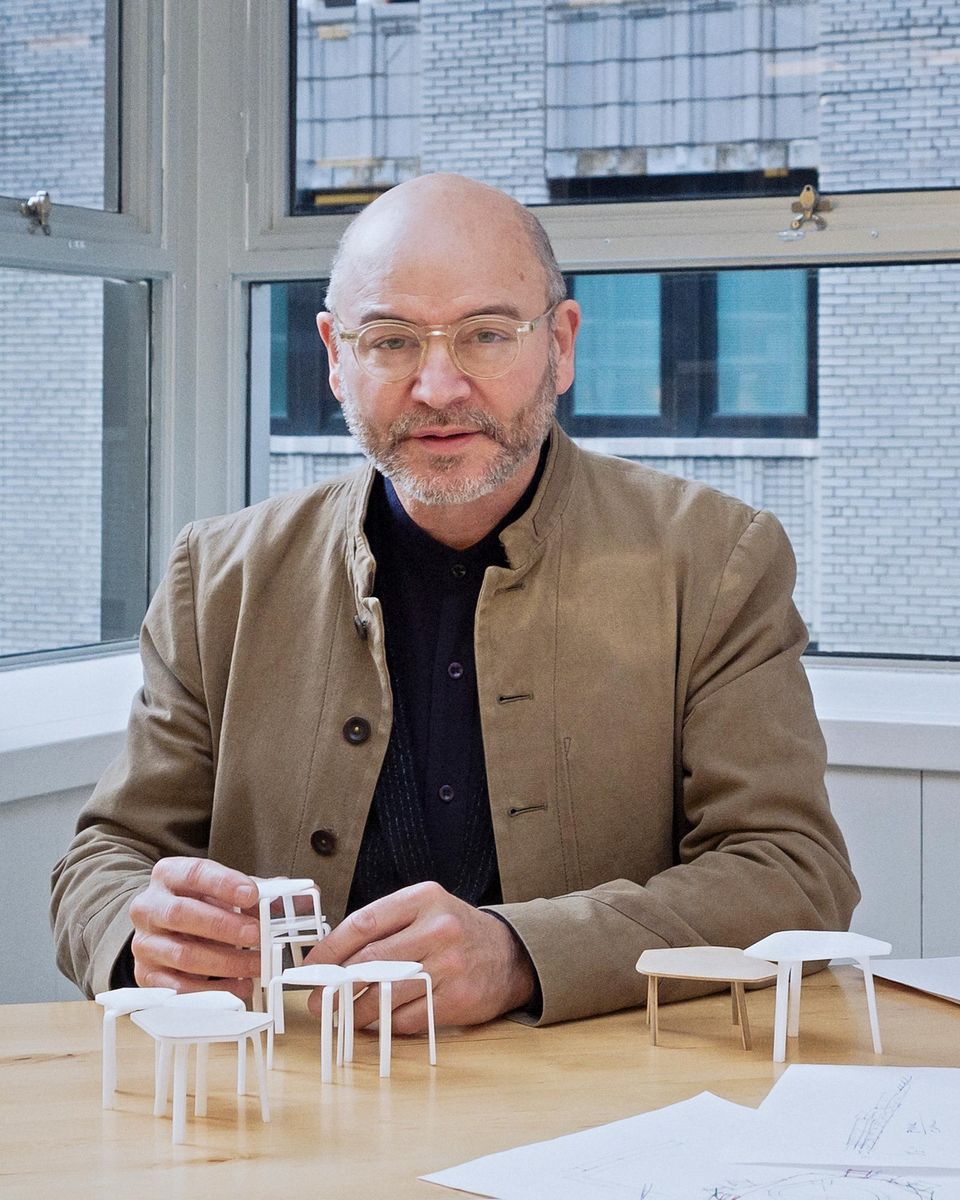
Civic architecture · Cultural continuity
Craig Dykers is an architect and founding partner of Snøhetta. He established the practice together with Kjetil Thorsen and other partners in Oslo in 1989 and its New York studio in 2004. He has led major public and cultural projects including the National September 11 Memorial Museum Pavilion, the San Francisco Museum of Modern Art expansion and Theodor Roosevelt Presidential Library. His work examines how architecture, landscape and cultural institutions can support openness, social interaction and everyday civic life - including Bibliotheca Alexandrina.
 Confirmed
Humane Urbanism · Post-disaster recovery
Mehmet Kalyoncu is an architect, business person, civil society leader and composer. In 2016, he founded the Türkiye Design Council (TTV). Following the 2023 earthquakes, he led the Hatay Revitalisation Plan, an experience that led him to establish the Humane Urbanism Foundation. The global non-profit brings together people across disciplines and geographies to strengthen how cities and communities prepare for and recover from extreme events, turning shared knowledge and real-world experience into practical action. He is also active in the real estate sector in Türkiye and the UK through ION. Passionate about music, he has composed 12 pieces.
 Confirmed
Co-creator & Programme Host · Inclusive Peacebuilding.
Thania Paffenholz is an internationally recognised peacebuilding scholar, practitioner and policy adviser, and the founder of Inclusive Peace. For more than three decades, she has supported peace and political transition processes through research, mediation, process design and advice to governments, international organisations and civil society. Her work has been particularly influential in advancing inclusive peace processes and strengthening the participation of women, civil society and other groups frequently excluded from formal negotiations. At Rethinking Rebuilding, Thania will host and facilitate the main programme, connecting its different voices, disciplines and perspectives while guiding the conversation across the three days.
 Confirmed
Frontline peace work · Civic reconstruction
Ilwad Elman is a Somali-Canadian peacebuilder and human-rights advocate working with Elman Peace in Mogadishu. Her work focuses on conflict prevention, gender justice, the rehabilitation and reintegration of former child combatants and support for survivors of sexual and gender-based violence. Through community-led programmes, she works to strengthen the agency of women and young people in shaping peace, security and social recovery. She brings direct experience of rebuilding civic life under conditions of prolonged conflict.
 Confirmed
Johan Börjesson / TKM
Artist, educator and co-founder of the Livingstone Office for Contemporary Arts
Anawana Haloba is a Zambian-Norwegian artist who lives and works between Oslo and Livingstone. She is a co-founder of the Livingstone Office for Contemporary Arts (LoCA), an artist-initiated, non-profit library, research centre and platform for collective experimentation established in 2014. Haloba is Associate Professor of Contemporary Art, specialising in decolonial theory in artistic practice, at the Oslo National Academy of the Arts. She is also a guest adviser at the Rijksakademie van Beeldende Kunsten in Amsterdam and is currently pursuing a PhD at the University of Bergen.
 Confirmed
Carlos Quezada
Embodied Knowledge · Cultural Transmission
Daniel Proietto is an Argentine-born choreographer, dancer, director and writer, and founder of Know Nation. His work spans performance, film and education. Alongside an international performing career, he develops interdisciplinary projects with artists, institutions and communities, exploring the body as a living archive through which memory, knowledge and culture are transmitted. Through Know Nation, he brings artistic creation into dialogue with social engagement, exploring how embodied experience can contribute to human connection and collective responsibility
 Confirmed
Researcher, writer and speaker | Culture, resilience and human behaviour
Hanne Eggen Røislien is a Norwegian researcher, writer and speaker specialising in culture, resilience and human behaviour under pressure. She has spent more than two decades working with the Norwegian Armed Forces and international military and security communities, with extensive experience from war and conflict. She has served as Special Adviser on Culture to the Norwegian Chief of Defence and currently serves on the Norwegian government-appointed committee reviewing the ethical framework of the Government Pension Fund Global. Her work explores what enables people, organisations and societies to adapt, endure and hold together under pressure.
 Confirmed
© Charlie Koolhaas
Artist, photographer and writer
Charlie Koolhaas is an artist, photographer and writer whose work explores contemporary cities, cultural diversity and the social effects of globalisation. Combining photography and writing, she reveals the everyday creativity, contradictions and shared cultures that emerge within rapidly changing urban environments. Her books include What Happened in Rotterdam, examining the transformation of a rebuilt and multicultural city, and City Lust, connecting observations from London, Guangzhou, Lagos, Dubai and Houston. She has exhibited internationally and taught photography, media theory and visual culture at institutions including TU Delft, the Sandberg Instituut and Design Academy Eindhoven.
Women, Peace and Security Programme Partner
The Cairo International Center for Conflict Resolution, Peacekeeping and Peacebuilding is an Egyptian public agency and an African Union Centre of Excellence. It works through training, capacity-building, convening and research across conflict prevention, peacekeeping, peacebuilding, disarmament and reintegration, Women, Peace and Security, and climate-related security. Drawing on African and Arab experience, CCCPA connects policy with practice and strengthens the capacity of institutions and communities to prevent conflict and build more inclusive and sustainable peace.
 Confirmed
Film · Documentation
Fatima Lianes is an award-winning Spanish film director, producer and journalist, and the founder of WildMind Films. With more than two decades of international experience, her documentaries combine investigative journalism with cinematic storytelling to examine conflict, trauma, memory, human rights, environmental change and reconciliation. Her work has been produced for broadcasters and platforms including Al Jazeera English, Max and Movistar Plus+. She approaches filmmaking as a way of creating understanding through intimate, human-centred stories.
 Confirmed
Philologist · President, World Philology Union
Jens Braarvig is a Norwegian philologist and historian of religion, Professor Emeritus at the University of Oslo, Director of the Norwegian Institute of Philology and President of the World Philology Union. His research spans Buddhist languages and literature, translation and the transmission of knowledge across cultures. Through research, teaching and the preservation of historical texts, he works to keep cultural heritage accessible and relevant to contemporary society. He also serves on the Snøhetta Foundation’s Advisory Board, contributing expertise in the history of knowledge, language and cultural exchange. At Rethinking Rebuilding, he joins The Art of Prepositions, connecting language, architecture and movement with Kjetil Trædal Thorsen and Daniel Proietto.
 Confirmed
Photo: Geir Mogen / NTNU
Architect · Professor Emeritus, NTNU
Hans Skotte is a Norwegian architect and Professor Emeritus at the Norwegian University of Science and Technology (NTNU). His work combines architectural practice, research and education, with a particular focus on reconstruction after war and disaster, community participation and socially responsible planning. Drawing on practical experience in Bosnia-Herzegovina and research into internationally funded housing reconstruction, he has examined how rebuilding can support lasting recovery when communities shape the process themselves. At NTNU, he helped develop the Urban Ecological Planning programme and mentored students through Live Studio projects, connecting architectural education with local needs and lived experience. At Rethinking Rebuilding, he joins Thania Paffenholz, Kjetil Trædal Thorsen and Mehmet Kalyoncu in the conversation Why This Symposium Doesn’t Work, bringing his experience of community-led recovery into a critical discussion of how dialogue can lead to action.
 Confirmed
Global Urban Lead, Save the Children; Founding Chair, Global Alliance – Cities4Children
Dr Sarah Sabry specialises in inclusive urbanisation, children and cities. She is the Global Urban Lead at Save the Children and founding chair of the Global Alliance – Cities4Children, which brings together more than 25 global organisations working towards better cities for children and young people. Her work connects child health and wellbeing with the built environment, urban poverty and informal settlements. She advances collaborative approaches that place children’s needs and experiences at the centre of urban development. Sarah has written and spoken widely on urban issues and co-edits the Cities4Children blog and the research series Cities for Children and Youth. She holds a PhD in Development Studies from SOAS, University of London, and a BSc in Computer Science from the American University in Cairo. She has taught at SOAS and the University of Zurich.
 Confirmed
Photo: Snøhetta
Co-creator · Snøhetta Foundation
“Our task is to turn spatial knowledge into shared learning”
Biography ↓Martin Gran is Managing Director of the Snøhetta Foundation, an independent non-profit organisation working across education, public dialogue and open knowledge. Previously a partner at Snøhetta, he now brings its spatial knowledge into learning programmes, partnerships and public exchange. He is a co-creator of Rethinking Rebuilding in Alexandria.
 Confirmed
Photo: Architectural Recovery Team
Co-creator · Humane Urbanism
Leyla van der Waarde is Collaboration Manager at the Humane Urbanism Foundation and a co-creator of Rethinking Rebuilding in Alexandria. She is also a founder and Head of Internal Relations of the Architectural Recovery Team, which connects research, design and local collaboration to support communities affected by earthquakes.
Programme in development · Further contributors will be announced.
A civic institution on the Mediterranean
A place of knowledge, memory, and exchange. The Bibliotheca Alexandrina becomes both venue and working context: a public institution from which to reconsider how learning and civic life support recovery.
View location

Oioioi


Oioioi

Photo: Gerald Zugmann
A shared platform by
with the Library of Alexandria and partners.


test
RSVP for the public opening day and reserve places for the following programme days, talks and workshops. You may register for one day or build a programme across all three.
Arriving in Alexandria
Search for Borg El Arab International Airport using the code HBE. It is outside central Alexandria, so we recommend arranging a hotel transfer or licensed taxi before you travel.
The most dependable routing is through Istanbul to HBE: Turkish Airlines serves Istanbul Airport and Pegasus serves Sabiha Gökçen. Limited seasonal flights from Athens, Rome and Milan may also operate; check the exact October timetable.
Dubai, Sharjah, Doha and Istanbul are the main connecting hubs. Direct services operate to HBE from Dubai and Sharjah, while Doha service depends on the seasonal timetable.
There are no direct flights to Alexandria. Connect through Istanbul, a major European airport or the Gulf. Cairo Airport can be a useful alternative when a through-ticket to HBE is not suitable.
Recommended stays
Accommodation options in Alexandria are listed below. Guests are encouraged to book directly with their preferred hotel and confirm current rates and cancellation terms before booking.
Beyond the programme
Seven ways to meet the Library and the city beyond the symposium sessions.
Guided tours of Bibliotheca Alexandrina will be offered on Day Two as part of the RR1 programme. Practical details will follow.
Follow the Corniche towards Qaitbay Citadel, especially in the late afternoon.
Ride a short stretch of Alexandria’s street tram for a slow, everyday view of the city.
See the Roman odeon, mosaics and remains of ancient lecture halls.
A concentrated introduction to Alexandria’s Hellenistic and Roman history.
Explore Fouad Street, Raml Station, old market streets, cafés and seafood.
Make a longer excursion to the landscaped royal grounds and Mediterranean edge.
Opening hours and access can change; check before setting out.